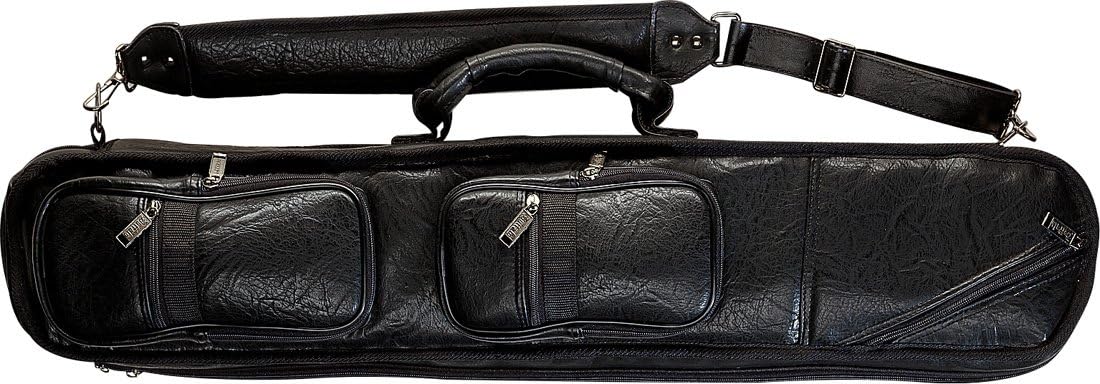
A quality pool cue is an investment, and protecting it should be a priority for every serious billiards player. Whether you play in a local league, compete in tournaments, or enjoy a few games with friends, a good cue case helps protect your equipment from scratches, accidental impacts, dust, and everyday wear.
For players who appreciate both style and durability, leather pool cue cases are among the most attractive options available. They offer a classic appearance, practical storage, and a professional look that complements quality pool cues.
But which leather pool cue case should you buy? With options ranging from compact single-cue cases to large tournament bags, choosing the right one depends on your budget, how many cues you carry, and the level of protection you need.
In this guide, we’ll explore some of the best leather and leatherette pool cue cases to look for on Amazon, explain their key advantages, and help you choose the right case for your playing style.
Shopping note: Product listings, prices, colors, and availability can change. Check the current Amazon listing to confirm the material, dimensions, capacity, and included features before purchasing.
Table of Contents
Quick Picks: Best Leather Pool Cue Cases
If you want to narrow down your choices, these are the models and product lines worth researching first.
| Pool cue case | Best for | Capacity to look for |
|---|---|---|
| KONLLEN Genuine Cowhide Leather 2×4 | Players who want real leather | 2 butts, 4 shafts |
| Gator Instroke Champion Leather 4×6 | Serious league players | 4 butts, 6 shafts |
| Gator J&J Instroke 2×4 | Everyday league play | 2 butts, 4 shafts |
| Lucasi Leatherette 4×8 | Players carrying multiple cues | 4 butts, 8 shafts |
| Casemaster Q-Vault Leatherette | Players prioritizing a hard case | Check the specific model |
These are research-based recommendations by use case, not a claim that every model is currently in stock on Amazon or has been independently tested for this article.
KONLLEN Genuine Cowhide Leather Pool Cue Case 2×4
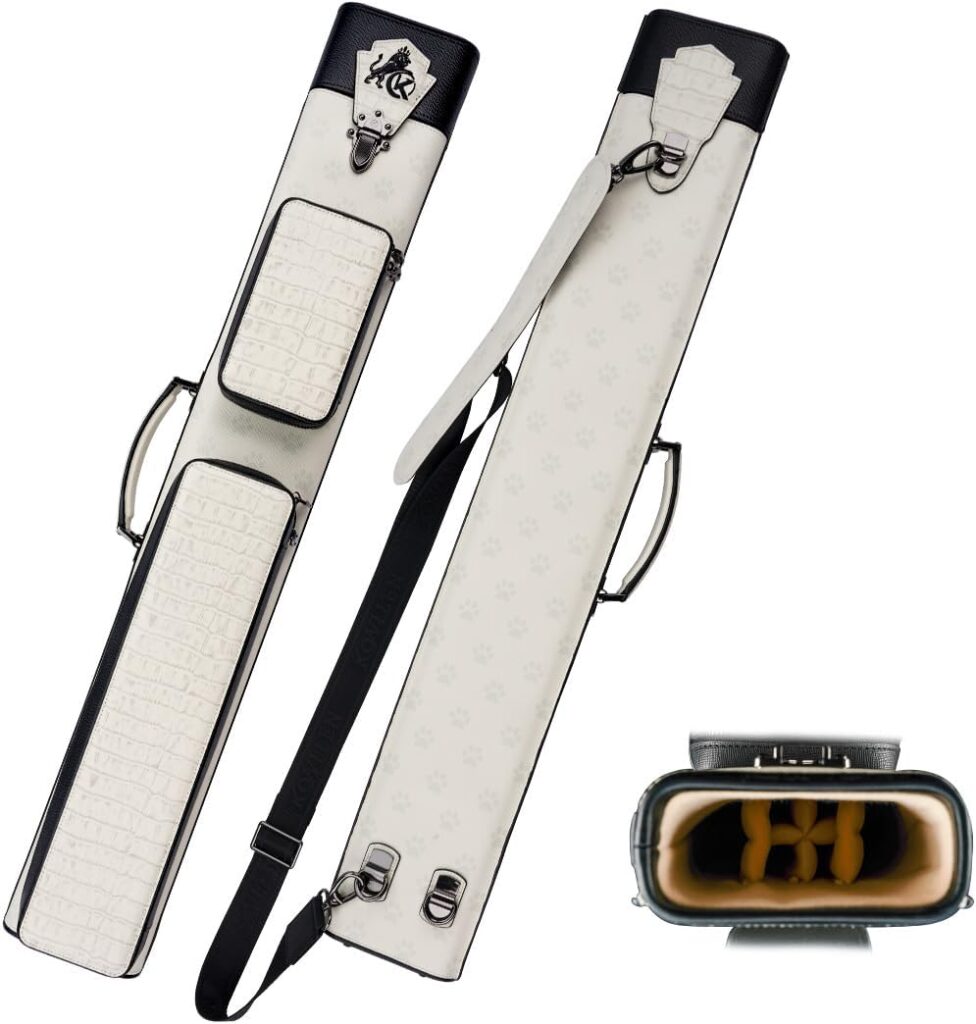
Best for players who want genuine leather and a classic appearance
If authentic leather is your top priority, the KONLLEN 2×4 cowhide leather pool cue case is one option worth investigating.
Unlike cases made primarily from synthetic leatherette, a genuine cowhide case offers the natural texture and distinctive appearance that many billiards enthusiasts appreciate. Leather can also develop character as it ages when properly cared for.
A 2×4 configuration is a practical size for many regular players. It is designed to accommodate two cue butts and four shafts, although you should verify the precise capacity and fit of the version you are considering.
Key features to look for
- Genuine cowhide leather exterior.
- Storage for multiple cue butts and shafts.
- Accessory pockets for chalk, gloves, and other small equipment.
- An adjustable shoulder strap for convenient transportation.
- An interior designed to keep cue components organized.
- Traditional leather appearance.
- Suitable capacity for a playing cue and additional equipment.
- Potentially appealing to players who value natural materials.
- A stylish choice for league nights and regular practice.
- Genuine leather may cost more than synthetic alternatives.
- Leather requires appropriate cleaning and conditioning.
- Interior protection and pocket quality should be checked carefully.
Who should buy it?
Consider this option if you want a leather case with a traditional look and enough room for more than one cue setup.
Gator Instroke Champion Leather Pool Cue Case 4×6

Best for serious league players and players with larger cue collections
Players who carry a playing cue, a break cue, spare shafts, and other equipment may benefit from a larger case.
The Gator Instroke Champion 4×6 is a model to investigate if you need room for several cue components. Its listed configuration is intended to accommodate four butts and six shafts, making it more spacious than a typical 2×4 case.
This additional capacity is particularly useful for players who prefer to bring backup equipment to tournaments or keep specialized cue setups available.
Key features to consider
- Large capacity for multiple cues and shafts.
- A leather or leather-style exterior, depending on the exact version.
- Carrying handles and a shoulder strap.
- Accessory storage for smaller billiards essentials.
- Internal organization to help separate cue components.
- Generous storage capacity.
- Useful for tournament players and equipment enthusiasts.
- Space for spare shafts and specialized cues.
- Classic styling associated with traditional cue cases.
- Larger cases can be heavier and bulkier.
- The extra capacity may be unnecessary for casual players.
- Confirm whether the particular model uses genuine leather or leatherette.
Who should buy it?
This is worth considering if you regularly carry several cues and shafts and prefer having your equipment organized in one case.
Gator J&J Instroke Leatherette Pool Cue Case 2×4
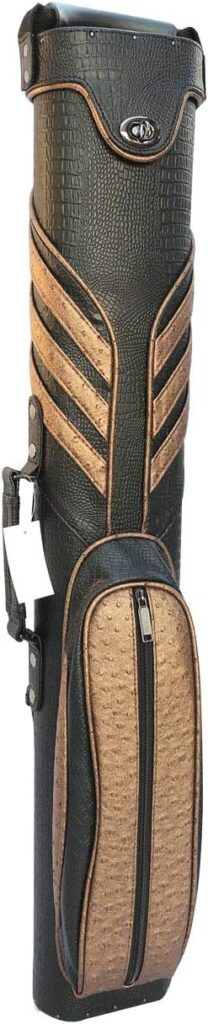
Best for everyday league play and practical storage
Not every player needs an expensive genuine leather case. For many people, a well-constructed leatherette case offers an appealing combination of appearance, functionality, and convenience.
The Gator J&J Instroke 2×4 is a model worth comparing if you want room for two cue butts and four shafts without moving to a much larger case.
Leatherette generally refers to a synthetic material designed to resemble leather. Depending on its construction, it can be easier to wipe clean and may cost less than genuine leather.
Key features
- A leather-style exterior.
- Storage for two cue butts and four shafts.
- Separate areas for cue components.
- A shoulder strap for carrying equipment.
- Accessory storage, depending on the version.
- Practical size for regular pool players.
- Room for a playing cue and additional cue components.
- Classic appearance without necessarily paying for natural leather.
- Suitable for players who want a balance of storage and portability.
- Synthetic materials can crack, peel, or wear over time.
- Padding and internal dividers vary by model.
- It may not provide the same impact resistance as a purpose-built hard case.
Who should buy it?
Consider this case if you play regularly and need more storage than a basic single-cue case but don’t want the bulk of a large tournament bag.
Lucasi Leatherette Pool Cue Case 4B/8S
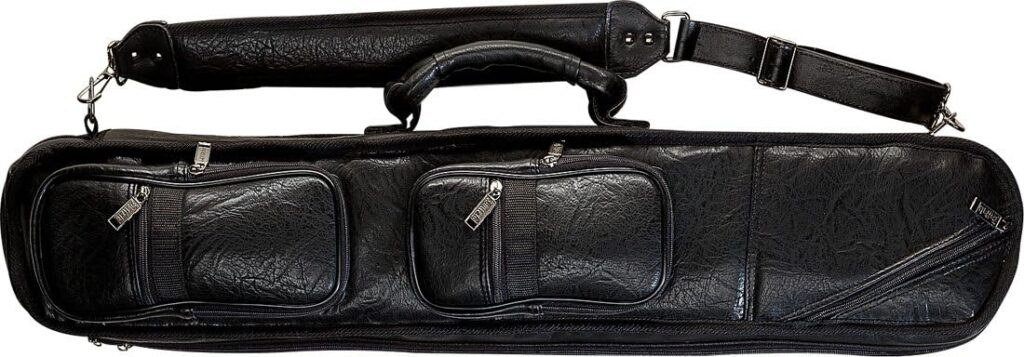
Best for players who carry several cues and spare shafts
For players with multiple cue setups, storage capacity can be just as important as appearance.
The Lucasi leatherette soft case in a 4B/8S configuration is worth researching if you need substantial room for playing cues, break cues, jump cues, and spare shafts.
The 4B/8S designation means four cue butts and eight shafts. This makes it a considerably larger option than a compact case designed for one or two cue setups.
Key features
- Leatherette exterior with a traditional leather-style look.
- High-capacity storage for cue butts and shafts.
- Multiple accessory pockets on applicable versions.
- Carry handle and practical everyday organization.
- A soft-case design that may be easier to handle than a comparable rigid case.
- Plenty of room for a larger collection of cue components.
- Convenient for players who carry specialized equipment.
- Accessory storage helps keep smaller items together.
- Attractive styling for players who prefer a classic look.
- A large case can be cumbersome when fully loaded.
- A soft case may offer less crush protection than a rigid hard case.
- Confirm the exact model number and dimensions before buying.
Who should buy it?
This option makes the most sense for tournament competitors, serious enthusiasts, and players who regularly carry several cues or spare shafts.
If you typically take only one cue to the pool hall, a smaller case will likely be more convenient.
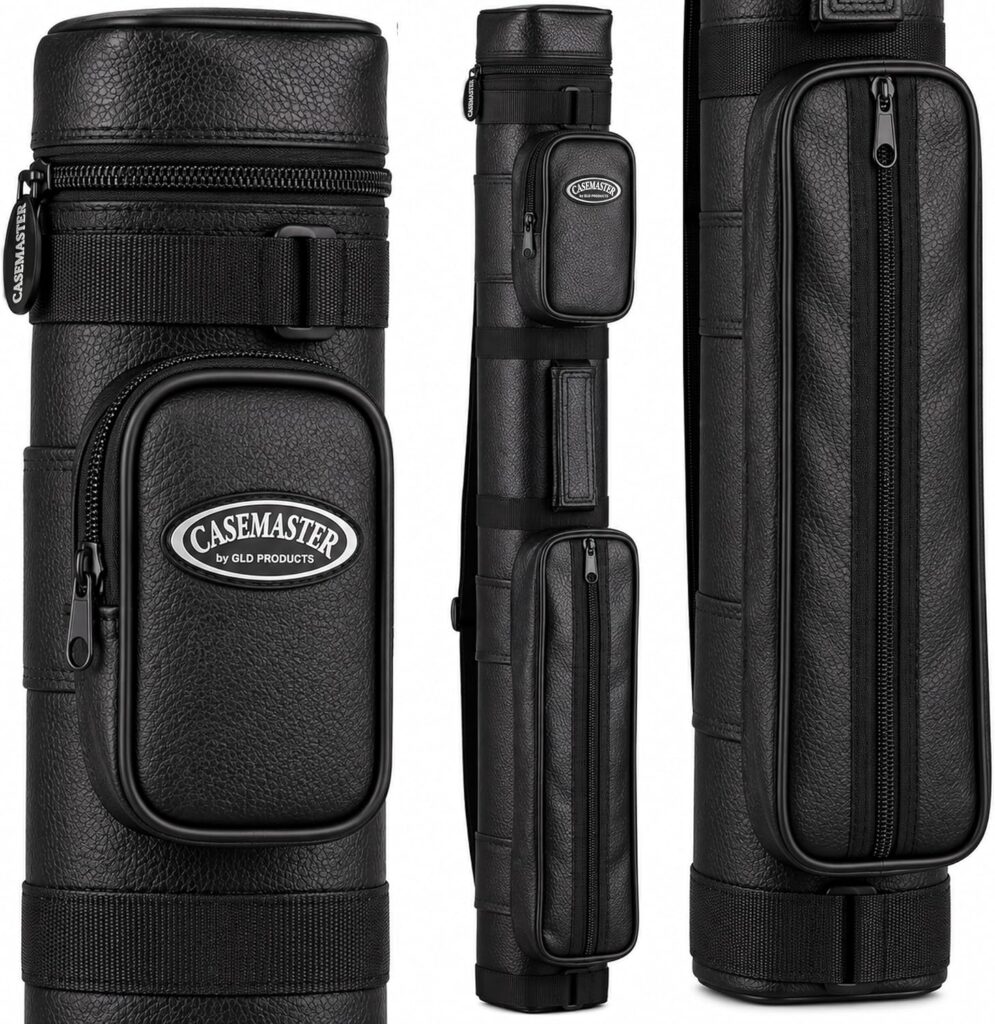
Casemaster Q-Vault Leatherette Hard Pool Cue Case
Best for players who prioritize a rigid case
Although not a traditional genuine leather case, the Casemaster Q-Vault deserves consideration if protection is more important to you than owning a natural leather exterior.
Q-Vault cases use a hard-shell design with a leatherette-style covering. The rigid construction is intended to help protect cue equipment during transportation, while the lined interior helps cushion the contents.
For players who frequently carry their cues in a vehicle, travel between pool halls, or share crowded tournament spaces, a hard case can be a sensible choice.
Key features
- Rigid protective shell.
- Leatherette-style exterior.
- Lined interior on applicable models.
- Accessory storage, depending on the configuration.
- A compact format on single-cue versions.
- Hard-shell construction helps resist crushing.
- Classic leather-style appearance.
- Useful for players who want a more structured case.
- Compact options are available for individual cue setups.
- It is not the right choice if you require genuine leather.
- Rigid cases can take up more room than some soft bags.
- Capacity and internal layout differ between models.
Who should buy it?
Consider a Q-Vault if you want a hard case with a leather-like finish and prefer a more structured design over a traditional soft leather bag.
What to Look for When Buying a Leather Pool Cue Case
Before purchasing a pool cue case, consider more than just its appearance. The best case is one that fits your equipment, suits your playing habits, and offers the right level of protection.
1. Genuine Leather vs. Leatherette
This is one of the most important distinctions to understand.
Genuine leather is made from animal hide. It often has a distinctive natural texture and can develop a desirable patina over time. Its durability depends on the leather grade, construction, stitching, and maintenance.
Leatherette is a synthetic material designed to resemble leather. It can provide a similar appearance at a lower price, and some versions are easy to clean. However, its long-term durability depends on the quality of the material and how the case is used.
Neither material automatically guarantees better cue protection. The internal construction matters just as much.
Buying tip: If you specifically want authentic leather, look for an explicit material description such as genuine cowhide leather. Do not assume that a listing described as “leather-look,” “PU leather,” “vinyl leather,” or “leatherette” uses natural leather.
2. Choose the Right Cue Capacity
Pool cue cases are commonly labeled with two numbers, such as 1×1, 2×2, 2×4, 3×5, or 4×8.
The first number generally indicates how many cue butts the case holds, while the second indicates how many shafts it accommodates.
| Capacity | Typical use |
|---|---|
| 1×1 | One cue butt and one shaft |
| 2×2 | Two cue butts and two shafts |
| 2×4 | Two cue butts and four shafts |
| 3×5 | Three cue butts and five shafts |
| 4×8 | Four cue butts and eight shafts |
These labels describe the intended storage capacity, but actual layouts vary. Check the manufacturer’s specifications to confirm that the case fits your equipment.
For a player who carries one playing cue, a 1×1 or 2×2 may be sufficient. League players who carry spare shafts or a break cue often benefit from a 2×4. Tournament players and collectors may prefer a 3×5 or 4×8.
Avoid buying a case that is larger than you need unless you expect your equipment collection to grow.
3. Interior Protection
The inside of a cue case plays a major role in protecting your equipment.
Look for features such as:
- Individual compartments or sleeves that separate cue components.
- Padding or lining that reduces scratches and minor impacts.
- A secure fit that prevents excessive movement.
- Adequate space for cue joints and joint protectors.
- A design that helps keep the cue components organized.
A premium-looking exterior is not enough if the interior allows shafts and butts to move around or rub against one another.
4. Hard Case vs. Soft Case
Leather and leatherette cases are available in different constructions.
Soft cases are often lighter and easier to carry. They may offer plenty of accessory storage, but their protection against crushing depends on the padding and overall structure.
Hard cases have a rigid shell that can offer better resistance to crushing and impacts. They may be bulkier, and a hard exterior alone does not guarantee good protection if the interior is poorly designed.
If you travel frequently with expensive cues, pay particular attention to shell rigidity, internal support, and secure closures.
5. Accessory Pockets
Pool players often carry more than just their cues.
Depending on your playing style, you may want room for:
- Chalk and a chalk holder.
- A pool glove.
- A tip tool or shaper.
- A microfiber cleaning cloth.
- Joint protectors.
- Small maintenance accessories.
If you carry a lot of equipment, check the dimensions of the pockets rather than simply counting them. A case with several small pockets may be less useful than one with a few appropriately sized compartments.
6. Zippers, Handles, and Shoulder Straps
These details may seem minor, but they matter when you use your case several times a week.
Look for sturdy stitching around the handles, secure zipper tracks, and a comfortable strap. An adjustable, padded shoulder strap can make a heavier case easier to carry.
For a large case, inspect how the strap attaches to the body. Reinforced attachment points can be particularly important when the case is fully loaded.
7. Price and Long-Term Value
The cheapest case is not always the best value, especially if you own an expensive cue.
At the same time, a high price does not automatically mean a case provides better protection. Compare the construction, materials, capacity, interior layout, and warranty before deciding.
Think about how often you play and how much your cue equipment is worth. Someone who plays once a month may not need the same case as a tournament competitor who travels several times a week.
How to Protect Your Pool Cue Inside a Leather Case
Buying the right case is only part of protecting your equipment. Proper storage and care can help extend the life of both your cue and your case.
Keep your cue dry. Moisture and significant temperature changes can affect wood cues. Avoid leaving your equipment in a hot vehicle or a damp environment for extended periods.
Use joint protectors. They help protect exposed cue joints and threads when the cue is disassembled.
Avoid overpacking. Do not force extra cue components into a case that is already full. Overcrowding can strain the zippers and allow equipment to press against one another.
Clean the exterior appropriately. Follow the manufacturer’s care instructions. Genuine leather and synthetic leatherette can require different cleaning methods, so avoid applying leather conditioners to an unknown material.
Check the interior periodically. Inspect the lining, dividers, zippers, and strap attachments for wear. A damaged lining or loose divider can reduce the protection the case provides.
Store the case properly. Keep it in a cool, dry location away from direct sunlight and excessive heat.
Are Leather Pool Cue Cases Worth the Money?
For many players, yes—but the answer depends on what you value most.
A genuine leather case can appeal to players who appreciate traditional craftsmanship, distinctive materials, and a classic billiards aesthetic. It may also be a good long-term purchase when it is well made and properly maintained.
A leatherette case may be the smarter choice for buyers who want the leather look without paying for genuine leather. Some synthetic cases also offer useful features such as rigid shells, lined interiors, and multiple accessory pockets.
The important point is to choose based on construction and protection rather than appearance alone. A well-designed case made from synthetic materials can be more suitable for your needs than a poorly constructed genuine leather case.
Conclusion: Choosing the Best Leather Pool Cue Case
The best leather pool cue case is the one that protects your equipment, fits your playing style, and provides the storage capacity you actually need.
For players who want authentic leather, the KONLLEN Genuine Cowhide Leather 2×4 is worth researching. Players who carry multiple cues may prefer to investigate the Gator Instroke Champion 4×6 or the high-capacity Lucasi Leatherette 4B/8S. For everyday league play, the Gator J&J Instroke 2×4 offers another practical configuration to compare. If rigid protection is your priority, the Casemaster Q-Vault is worth considering, although it uses a leatherette-style exterior rather than traditional genuine leather.
Before making your final decision, compare the material, capacity, internal protection, pocket layout, and carrying comfort. Read recent Amazon customer reviews, check the exact product specifications, and confirm the return policy.
Most importantly, don’t choose a case based on looks alone. Your pool cue is an important part of your game, and the right case helps keep it organized and protected between sessions.
Whether you’re a casual player, a league regular, or a dedicated tournament competitor, investing in a well-constructed cue case is a practical step toward taking better care of your equipment.
Ready to find your next pool cue case? Start by comparing the available options on Amazon, and choose the one that delivers the best combination of material quality, protection, capacity, and value for your needs.
Frequently Asked Questions
What is the best leather pool cue case for most players?
A 2×4 case is a practical starting point for many regular players because it provides room for two cue butts and four shafts. The KONLLEN genuine cowhide 2×4 and Gator J&J Instroke 2×4 are options to compare, depending on whether authentic leather or a leatherette-style exterior is your priority.
Are leather pool cue cases better than nylon cases?
Not necessarily. Leather can offer a premium appearance and, when well made, long service life. Nylon cases can be lighter and more affordable. Overall protection depends on the case’s construction, padding, compartments, and intended use.
Does genuine leather protect a pool cue better?
Not automatically. Leather primarily describes the exterior material. The internal structure, padding, dividers, and fit have a major influence on how well a case protects cue components.
What size pool cue case should I buy?
Choose based on the number of cue butts and shafts you carry. A 1×1 is suitable for one cue setup, a 2×4 offers additional room for spare components, and a 3×5 or 4×8 accommodates a larger collection.
Always check the product dimensions and manufacturer’s capacity specifications before ordering.
Can I find genuine leather pool cue cases on Amazon?
You can search Amazon for genuine leather and cowhide cue cases, but listings may also include leatherette, PU leather, and vinyl products. Read the material description carefully and confirm the exact model before purchasing.
How long does a leather pool cue case last?
There is no universal lifespan. Quality of construction, frequency of use, storage conditions, and maintenance all influence durability. Inspect the stitching, closures, lining, and strap attachments when comparing cases.