
Choosing the right pool cue is one of the biggest decisions any billiards player can make. For decades, the debate was mostly about what type of wood made the best cue—maple, ash, ebony, cocobolo, and so on. But over the last several years, a new competitor has taken the billiards world by storm:
Carbon fiber pool cues.
Today, players at every level—from casual shooters to world-class professionals—are comparing carbon fiber vs. wood pool cues to decide which one offers the best feel, consistency, and long-term performance.
If you’re trying to choose between these two cue types, this ultimate guide breaks down everything you need to know, including:
- How carbon fiber cues differ from wood cues
- Pros and cons of each
- Durability, accuracy, vibration, and maintenance comparisons
- Which cue is best for beginners, intermediates, and pros
- Price ranges and purchase recommendations
Let’s dive in.


What’s the Real Difference Between Carbon Fiber and Wood Cues?
Before comparing performance, it’s important to understand what sets these two cue types apart.
Wood Pool Cues
Wood cues—usually maple—have been the industry standard for centuries. They offer a natural feel, traditional aesthetics, and a warm, organic feedback when striking the cue ball. Many players love the “soul” of a wood cue.
Carbon Fiber Pool Cues
Carbon fiber cues are made from woven carbon sheets that are resin-bonded and compression-molded. The material is incredibly strong, resisting warping, denting, humidity, and heat. These cues deliver consistent performance no matter the environment.
In short:
- Wood cues prioritize tradition and feel.
- Carbon fiber cues prioritize consistency and durability.
Table of Contents
Performance Comparison
Let’s break down how each cue type performs across the most important playing categories.
Cue Ball Control
| Carbon Fiber Cues | Wood Cues |
|---|---|
| Carbon fiber shafts are engineered to be extremely stiff. This stiffness creates: • More predictable cue ball deflection • Greater power transfer • Improved long-distance accuracy Because carbon fiber shafts minimize flex, the cue ball tends to stay more on line, especially when applying spin. | Wood cues have varying levels of stiffness depending on the grain quality and shaft construction. They offer: • Smooth, natural feedback • More “touch” on finesse shots • A slightly softer hit feel While many players love the softer hit, wood shafts can produce more cue ball deflection—especially on English shots. |
| Winner: Carbon fiber (for accuracy) | Runner-up: Wood (for touch and finesse) |
Deflection (Squirt)
Deflection occurs when the cue ball is pushed offline due to spin.
| Carbon Fiber Cues | Wood Cues |
|---|---|
| Carbon fiber is famous for its low-deflection performance. Some shafts are among the lowest-deflection options ever produced. | Even high-quality wood LD (low-deflection) shafts generally produce more squirt than carbon fiber because the material naturally flexes more. |
| Winner: Carbon fiber |
Cue Feedback and Vibration
This category largely comes down to personal preference.
| Carbon Fiber Cues | Wood Cues |
|---|---|
| • Crisp, stiff hit • Minimal vibration • Very controlled, yet sometimes described as “too quiet” Some players say carbon fiber lacks the “personality” of wood. Others love the clean feedback. | • More vibration for shot feedback • A warmer, more traditional feel • A slightly softer hit Many long-time billiards players prefer wood for this reason alone. |
| Winner: Depends on preference | Winner: Depends on preference |
Consistency
| Carbon Fiber Cues | Wood Cues |
|---|---|
| Carbon fiber cues offer unmatched consistency because: • They never warp • They are not affected by heat, cold, or humidity • The hit is identical every single time → This is one of the biggest advantages over wood. | Wood is a living material. Even when sealed: • It can warp over time • It reacts to humidity • It changes with temperature Two identical wood shafts might not feel or hit exactly the same. |
| Winner: Carbon fiber |
Durability Comparison
| Carbon Fiber Cues | Wood Cues |
|---|---|
| Carbon fiber cues are: • Dent-proof • Warp-proof • Scratch resistant • Nearly impossible to crack under normal use They’re built for decades of heavy play. | Wood cues: • Can dent or chip • Can warp • Can dry out or swell • Needs regular maintenance Even well-cared-for cues eventually show aging. |
| Winner: Carbon fiber (by a long shot) |
Maintenance Requirements
| Carbon Fiber Cues | Wood Cues |
|---|---|
| Very low maintenance: • Wipe with an alcohol pad • No conditioning needed • No sanding • No replacing ferrules as often Because the surface is impermeable, it stays smooth permanently. | Wood requires more care: • Needs to be cleaned and polished • Must be protected from moisture • Can require sanding or sealing • Should be stored properly |
| Winner: Carbon fiber |
Price Comparison
| Carbon Fiber Cues | Wood Cues |
|---|---|
| Typically $100–$800+ depending on brand and technology. Premium models cost more but last longer. | Entry-level wood cues can be as low as $80–$200, with high-end custom cues costing $300–$500+. |
| Winner: For long-term value | Winner: For budget players |
Aesthetics and Style
| Carbon Fiber Cues | Wood Cues |
|---|---|
| • Sleek modern look • Usually minimalistic • Often available in matte black • Not customizable visually | • Huge variety of designs • Custom exotic woods • Inlays, rings, and detailed craftsmanship • Collectible appeal |
| Winner: Wood |
If you enjoy visually stunning cues, wood is unbeatable.
Which Cue Should YOU Buy? (Player Level Breakdown)
| Beginner | Intermediate | Advanced or Competitive |
|---|---|---|
| Best choice: Wood cue • Affordable • Comfortable feedback • Great for learning fundamentals You don’t need a $700 carbon fiber cue to learn proper mechanics. | Best choice: Carbon fiber shaft with a mid-range butt • Major accuracy improvement • Better consistency • Helps develop advanced control techniques Many intermediate players experience an immediate leap in performance when switching to carbon fiber. | Best choice: Carbon fiber • Low deflection • High consistency • Zero warping • Reliable in tournament environments This is why so many professionals now use carbon fiber shafts. |
Pros and Cons Summary
Final Verdict: Carbon Fiber or Wood?
Here’s the simplest recommendation:
Choose carbon fiber if you want:
- Maximum accuracy
- Long-term durability
- A cue that never warps
- The best performance for spin and consistency
Choose wood if you want:
- A traditional feel
- Beautiful craftsmanship
- Budget-friendly options
- A softer, more natural hit
At the end of the day, the best cue is the one that feels right in your hands. But in terms of modern performance, consistency, and lifespan—carbon fiber has become the superior choice for most serious players.
Conclusion
Choosing between a carbon fiber and a wood pool cue ultimately comes down to your playing style, your priorities, and your long-term goals. Carbon fiber cues dominate when it comes to consistency, durability, low deflection, and overall performance, making them the preferred choice for serious and competitive players who want the most accurate and reliable cue possible. Wood cues, however, continue to hold their place in the billiards world thanks to their traditional feel, natural feedback, beautiful craftsmanship, and wide range of price options.
If you value performance and long-term precision, carbon fiber is hard to beat. But if you appreciate the classic feel of wood, enjoy a softer hit, or want a cue with personality and artistry, a well-made wood cue may be the perfect fit. No matter which you choose, the right cue will elevate your game, boost your confidence, and make every shot more enjoyable.
Ultimately, the best cue is the one that inspires you to play more—and play better.
Top Carbon Fiber Pool Cues (Best Selling & Highly Rated)
Cuetec Cynergy CT15K – Premium carbon pro shaft cue known for excellent consistency and smooth hit, great for serious players.

Cuetec Cynergy CT15K 11.8mm Carbon Fiber Low Deflection Pool Cue Shaft - 5/16 x 18

Lucasi Pinnacle Midnight Black Carbon Fiber Cue – High-performance cue with aerospace-grade carbon fiber shaft for superior playability and durability.

LUCASI LP15 Cue, Midnight Black, Cocobolo/Silver Crush Inlay, Pinnacle Carbon Fiber Composite Shaft
Crical CL‑01 Carbon Fiber Pool Cue – Budget-friendly low-deflection carbon fiber cue ideal for beginners or casual shooters.

CRICAL Carbon Fiber Pool Cue Stick 58" Billiard Cue Sticks Professional Low Deflection Pool Sticks with 3/8 * 8 Pin...
McDermott Defy Carbon Fiber – a shaft that defies the stereotype of carbon fiber shafts.

McDermott Defy Carbon Fiber 12.5 mm 29 in. Billiards Pool Cue Shaft (3/8x10.843)
Top Wood Pool Cues (Classic & Popular Choices)
Meucci All Natural Wood Pool Cue – Elegant handcrafted wood cue with strong performance and traditional feel.

Meucci Pool Cue - All Natural Wood with Rainbow Stain - Pool Stick with Maple Forearm, Solid Wood Handle, High...
McDermott Classic Cue Kit – Great starter wood cue set with accessories, perfect for beginners to intermediate players.
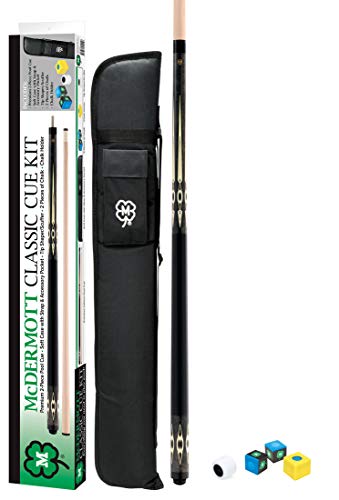
McDermott Classic Pool Cue Kit (Dark Gray, 20oz)
Viper Elementals Ash Wood Cue – Solid maple/ash cue with leather tip and Irish linen wrap—excellent value pick.

Viper by GLD Products Elemental 58" 2-Piece Billiard/Pool Cue, Natural Ash with Wood Grain, 20 Ounce (50-0853-20)
Viking Valhalla 100 Series Pool Cue – Highly rated no-wrap traditional wood cue with smooth stroke and reliable balance.

Viking Valhalla 100 Series with Irish Linen Wrap 2 Piece 58” Pool Cue Stick VA111 (19oz, Black)
FAQ: Carbon Fiber vs. Wood Pool Cues
Carbon fiber cues are generally better for accuracy, consistency, and durability. They offer lower deflection, resist warping, and provide a reliable hit every time. However, many players still prefer wood for its traditional feel and natural feedback.
Yes. Carbon fiber shafts are engineered to minimize flex, which significantly reduces cue ball deflection (squirt). This helps players get more predictable results when using English (side spin).
No. One of the biggest advantages of carbon fiber is that it is warp-proof. It does not react to humidity, heat, or temperature changes like wood does.
Yes. Carbon fiber delivers a crisp and stiff hit with minimal vibration. Wood cues tend to have a warmer, softer, and more traditional feel. Preference depends on the player.
For serious or competitive players—absolutely. Their performance, low maintenance, and long lifespan make them a smart long-term investment.
For beginners, a quality wood cue is usually sufficient.
Yes, beginners can use carbon fiber cues, but it’s not necessary. Many new players prefer to start with a more affordable wood cue and upgrade later when they better understand their playing style.
Simply use: A microfiber cloth, a small amount of rubbing alcohol, and a carbon fiber cleaning wipes (optional).
Carbon fiber requires very little maintenance.
Yes. Carbon fiber shafts use the same chalking method as wood shafts. Some players notice less chalk buildup, which is a bonus.
Yes. While many pros have switched to carbon fiber shafts, plenty still prefer high-end wood cues for their feel, craftsmanship, and personalized touch.
Carbon fiber, by a large margin.
A well-made carbon fiber shaft can last decades with minimal wear, while wood cues naturally age, dent, or warp over time.